Best Government Employee Allotment Loans (2026): How to Qualify and Where to Apply
Last updated: June 2026
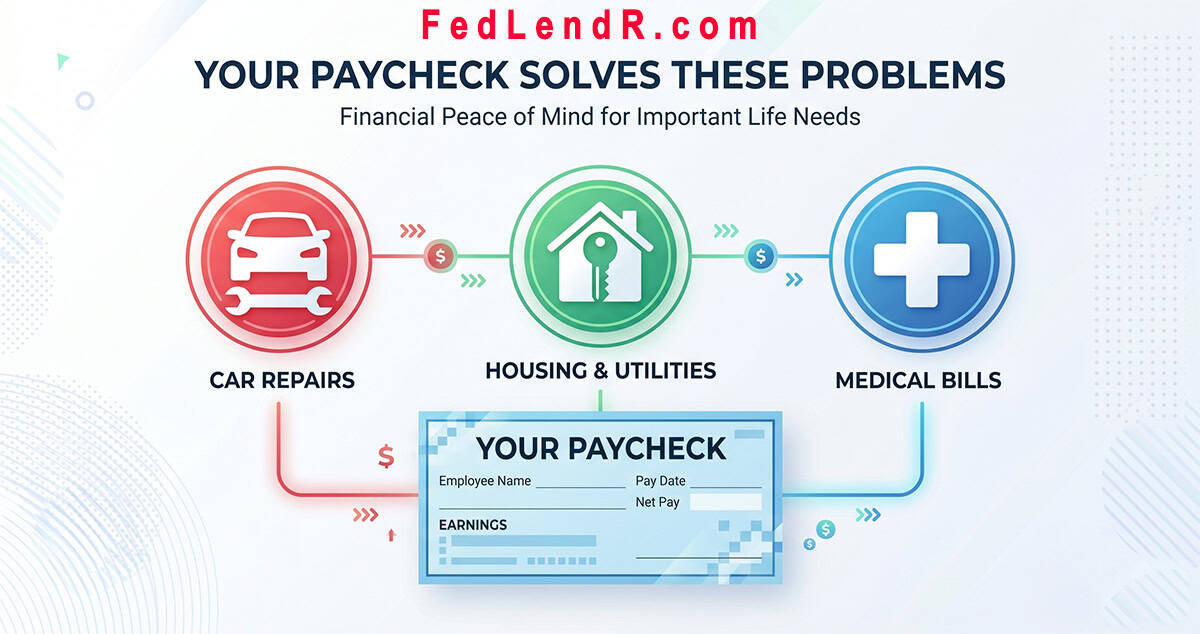
The best allotment loan for a government employee is one that uses your federal paycheck as the repayment mechanism, not your credit score as the gating factor.
An allotment loan is a personal installment loan available to federal government employees and USPS workers, repaid automatically through payroll deduction before the money ever hits your bank account.
Loan amounts typically range from $500 to $10,000, terms run from 6 to 48 months, and your federal employment is the primary qualification.
If you’ve been turned down by a bank or credit union because of your score, this is a different system.
The lender is not betting on your credit history.
They’re betting on a steady government paycheck, and that changes what’s possible.

What Makes a Government Employee Allotment Loan “the Best”
Not every installment loan is worth taking. When you’re comparing options, look for four things.
Payroll deduction repayment. The payment comes out of your paycheck before it ever hits your bank account.
No NSF fees. No missed payment risk. No collection calls because you forgot a due date.
Soft credit pull to see your options. You should be able to check what you can borrow before a lender dings your credit report.
Hard inquiries stay on your report for two years.
Find a lender that shows you the terms first.
Transparent, fixed terms. The best allotment loans tell you upfront: here’s your payment amount, here’s your term length, here’s the total you’ll repay.
No surprises at payoff.
Principal paydown on every payment. Every payment should reduce your balance.
The loan should move you forward, not roll you sideways.
If the fine print shows fees or add-on products inflating your balance, walk away.
Who Qualifies for a Government Employee Allotment Loan?
If you’re a federal civilian employee or a USPS worker, you have a real shot at approval, even with a damaged credit score.
The reason is structural.
Allotment lenders take less risk than traditional banks because repayment is automated through your agency payroll.
They’re not counting on you to remember a payment.
The deduction happens before you see the money.
That lower risk means they can approve borrowers that banks turn away.
Credit scores under 620 are common among people who get funded through allotment programs.
What matters most is your current employment status and whether your paycheck can support the deduction.
If you’re actively employed by a federal agency or the postal service, you’re in the eligibility pool.
Learn more about how the qualification process works at Allotment Loans for Federal Employees and USPS Workers.
Check your options here. No hard credit pull to see what’s available.
How a Government Employee Allotment Loan Works
The process is faster than most people expect. Here’s what happens from application to funded.
Step 1: Apply online. Fill out a short application, roughly 5 minutes. Basic information: your agency or employer, your income, the amount you need.
Step 2: The lender reviews your application. They look at your employment status, income, and what your take-home pay will be after the allotment deduction. Credit is reviewed, but it’s not the primary decision factor.
Step 3: Receive your decision. Most applicants hear back within 24 hours. Some get a response the same day.
Step 4: Funds are deposited. If approved, the loan amount hits your bank account, often the same business day or the next.
Step 5: Payroll deduction begins. Your agency payroll sets up the allotment. Each pay period, the payment is deducted automatically before your check is direct-deposited. Fixed payments, fixed term, no guesswork.
For a deeper look at the mechanics, including how payroll allotment works under 5 CFR 550, Subpart C, read How Allotment Loans Work.
Allotment Loans vs. Other Borrowing Options for Federal Employees
A lot of federal employees assume a personal bank loan or credit card is the safer choice. The numbers tell a different story.
| Feature | Allotment Loan | Personal Bank Loan | Credit Card Cash Advance |
|---|---|---|---|
| Repayment method | Automatic payroll deduction Better | Manual bank draft or check | Minimum monthly payment |
| Credit score required | Low scores accepted (500s+) Better | Typically 650+ required | Card must already be open |
| Principal paydown | Yes — every payment reduces balance Better | Yes | Not if paying minimum only |
| Missed payment risk | None — deducted before you see it Better | High — requires manual action | High — easy to underpay |
| Funding speed | Same day or next business day Better | 3–7 business days typical | Instant (ATM cash advance) |
| Loan amounts | $500 – $10,000 | $1,000 – $50,000+ | Limited to available credit |
| Fixed term | Yes — 6 to 48 months Better | Yes | No — open-ended revolving |
| Who it's built for | Federal employees & USPS workers Better | Borrowers with strong credit | Existing cardholders |
Why Payroll Deduction Feels Safer Than Other Loans
Predictable payments reduce missed deadlines
Predictability reduces stress. Fixed payments tied to payday remove guesswork.
Bank-draft loans rely on account balances. If timing slips, fees follow. Payroll deductions hit before the money reaches your account.
Choose a repayment that matches your pay cycle. This alignment lowers missed payments and late fees.
Less friction during financial stress
Emergencies create chaos. Simpler systems help you focus on the problem, not the loan.
Example. A federal employee needs car repairs. By aligning repayment with payday, they avoid overdrafts and juggling bills.
For deeper detail, see our guide: How USPS Employees Set Up Payroll Allotments Through PostalEASE.
For deeper detail, see the internal guide: How Federal Payroll Allotments Work Step by Step.

The 7-Point Checklist to Pick the Right Allotment Loan
Rate, term, and funding speed
Set limits before you compare. Decide the maximum payment you can handle per paycheck. Decide how fast you need funds.
Rates vary. Terms vary. Speed matters in emergencies. Some lenders fund within one business day after approval.
Do not trade speed for unclear terms. Balance both.
Fees, cancellation rights, and payroll setup
Ask about fees. Origination fees. Prepayment penalties. Late fees.
Verify cancellation rights. You should be able to stop the allotment after payoff. Get this in writing.
Example. A borrower pays off early and submits a cancellation form. Payroll deductions stop the next cycle.
Common Gotchas and How to Avoid Predatory Traps
Red flags that signal risk
Walk away if terms are unclear. Walk away if fees are hidden. Walk away if customer support is unreachable.
Clear disclosure matters. A real lender explains repayment, total cost, and cancellation steps upfront.
If pressure replaces clarity, stop.
How to protect your paycheck
Keep records. Save allotment authorization forms. Save payoff confirmations.
Check your pay stubs. Confirm deductions match the agreement. Act fast if errors appear.
Your paycheck is your anchor. Protect it.
FAQs About Government Employee Allotment Loans
Do I need good credit to get a government employee allotment loan?
No. Credit score is not the primary factor. Lenders that specialize in allotment loans focus on your federal employment and income. Borrowers with scores in the 500s are regularly approved. The payroll deduction structure reduces the lender’s risk, which means they can work with borrowers that traditional banks turn away.
How much can I borrow with an allotment loan?
Loan amounts typically range from $500 to $10,000. The specific amount you’re approved for depends on your income, your existing debt obligations, and how much room you have in your paycheck after the allotment deduction. The lender won’t set up an allotment that leaves you without enough take-home pay to live on.
How fast can I get funded?
Most applicants receive a decision within 24 hours. If approved, funds can hit your account the same day or the next business day. The application itself takes about 5 minutes. Ready to see what you can borrow? Check your options here.
Does taking out an allotment loan affect my security clearance?
Responsible borrowing does not damage a security clearance. What investigators look for is unmanageable debt, delinquencies, and patterns that suggest financial vulnerability to outside pressure. An allotment loan with on-time automatic payments demonstrates the opposite: structured, responsible debt management.
What happens to my loan if I leave federal service?
If you leave your federal job, the payroll allotment stops automatically. The loan balance doesn’t disappear. The lender switches repayment to direct bank draft for the remaining payments. This is worth understanding before you apply. Ask the lender directly how they handle job separation before signing.
What to Do Next If You Need Funds Today
When an allotment loan is the right move
An allotment loan fits when speed, control, and predictability matter. It works best when other options are closed and the emergency cannot wait.
Use one trusted comparison point. Avoid jumping between offers. Focus on clarity and fit.
Example. An employee reviews options, confirms eligibility, and applies the same day. Funds arrive before the next bill hits.
Next step to check eligibility
If you are ready to act, check current allotment loan options built for federal and USPS employees.
This step costs nothing. It gives you answers fast.
Act with purpose. Solve the emergency. Keep your footing.
Allotment Loans and Security Clearance
What clearance investigators actually look for — and why a responsibly repaid allotment loan is not a problem under Guideline F.
Allotment Loans with Bad Credit
Why federal employment changes the equation for borrowers with scores below 600, and what lenders actually look at.
PostalEASE: USPS Allotment Setup Guide
Step-by-step: how postal employees set up payroll allotments through LiteBlue and PostalEASE.
Allotment Loans for TSA Employees
TSA-specific eligibility, pay scale context, and how allotment repayment works for Transportation Security Officers.
How Allotment Loans Work
The full breakdown — eligibility, payroll deduction setup, and what lenders evaluate when reviewing a federal employee application.
Allotment Loans for Federal Employees
The complete guide: what allotment loans are, who qualifies, how much you can borrow, and how fast funding happens.
Written by Jer Ayles | 20+ years in consumer lending | About FedLendR