Allotment Loans for Postal Employees: 2026 USPS Guide
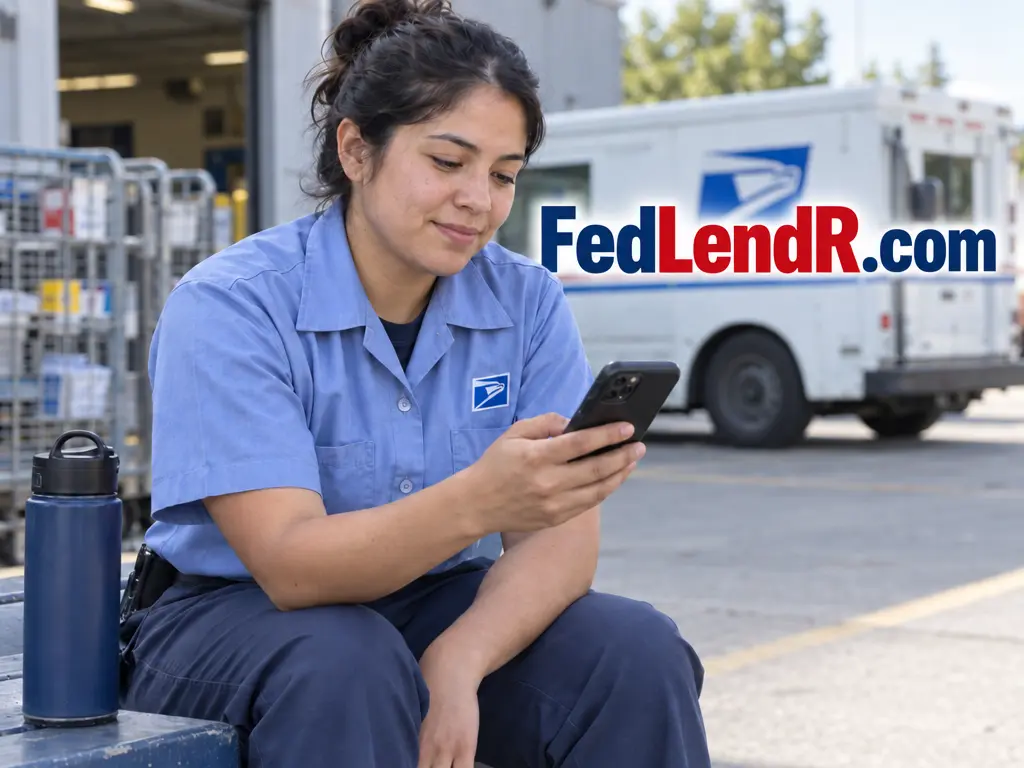
If you work for the U.S. Postal Service and a sudden bill or emergency pops up, allotment loans for postal employees can offer a structured way to get cash and repay it from your paycheck.
In this guide, you will see how these loans work, what lenders usually look for, and how to avoid common traps.
You will also learn how FedLendR.com connects USPS workers with partners that offer allotment style loans through payroll deduction.
Brand: FedLendR.com
Author: Jer Ayles, Consumer Lending Expert and founder of FedLendR.com
Service: Plain-English guides to allotment loans for USPS and federal employees, plus a form that connects you with an independent lending partner.
Last updated: October 2026.
TLDR: Allotment loans for postal employees in one minute
Allotment loans for postal employees are loans that are repaid through a fixed amount deducted from your USPS paycheck.
They are often used for emergencies like car repairs, medical bills, or catching up on essential living costs.
- Approval, loan amounts, and costs depend on the partner lender, your income, and your overall situation. No lender approves everyone.
Active duty military are not eligible through FedLendR.com.
Used carefully, these loans can offer predictable repayment. Used recklessly, they can add to long-term money stress.
Ready to see options?
Check your allotment loan options with a FedLendR.com partner
Who this guide is for
This article is written for:
USPS mail carriers, clerks, and other postal employees who live paycheck to paycheck.
Workers with fair or poor credit who may not qualify for standard bank loan rates.
Postal workers who need emergency cash and prefer a steady, predictable payment taken from each paycheck.
If you want a structured way to handle a money emergency with paycheck based repayment, and you are trying to avoid a repeat cycle of last minute, expensive loans, this guide is for you.
If you are looking for:
Approval no matter what
A loan where your credit and debts don’t matter at all
A cheap, long-term solution to ongoing money problems
Then an allotment loan is unlikely to be the right tool. It is a short to medium-term option, not a cure-all.
After you tap “See My Loan Options,” your request continues on our lending partner’s secure application page. That page uses a different name than FedLendR. That is normal. Finish your application there to see your loan options.
What are allotment loans for postal employees?
Allotment loans for postal employees are personal loans that are repaid through an automatic deduction from your USPS paycheck.
Instead of paying a bill separately, a set amount is taken out before you see your pay.
Typical uses include:
Emergency car repairs so you can keep working your route
Medical or dental bills that cannot wait
Catching up on rent, utilities, or other essential bills
Consolidating a few small, high-cost debts into one fixed payment
A few key points:
FedLendR.com is a connector that guides postal and federal employees to independent partners offering allotment-style loans.
Terms vary by lender and by state. Each partner sets its own approval rules, loan amounts, and costs.
No lender approves everyone. Your income, employment history, credit profile, and existing obligations all matter.
At FedLendR.com, we make allotment loans easy to understand so you can make a thoughtful decision, not a rushed one.
Who allotment loans are for (and who they are not)
Good fit USPS borrowers
You may be a fit for a partner allotment loan if you:
Are a current USPS employee with dependable income.
Have been on the job for a steady period of time.
Need cash for a real and urgent expense, not casual spending.
Prefer a fixed payment scheduled through payroll so you do not forget.
Understand that this is a loan with real costs, not a gift.
Probably not a fit
An allotment loan is probably not right if you:
Are active duty military. FedLendR.com partners do not serve active duty military borrowers.
Have no clear plan to repay and are already skipping essential bills.
Want the cheapest possible loan and can wait for it. A credit union or bank may sometimes be cheaper.
Are hoping for approval with no questions asked. That is not how responsible lenders operate.
If you are unsure, think about your goal.
You want a structured way to handle emergencies through paycheck-based repayment without getting trapped in a deeper hole.
If the loan will clearly make things worse, it is a warning sign.
Start the secure form. If a lender approves your request, funds may be available as soon as the next business day.
How allotment loans work for USPS employees (step by step)
Here is a simple view of how allotment loans for postal employees often work when you connect with a partner through FedLendR.com:
You decide how much you really need.
Focus on the emergency amount, not a wish list. Borrowing more than you need raises your payment and total cost.You visit FedLendR.com and connect to a partner.
Use our partner link to share basic information like employment, income, and your need for an allotment-style or payroll-based loan.The partner lender reviews your application.
They may look at your pay, time on the job, credit history, current debts, and any existing allotments or deductions.If approved, you review your terms.
You should see a proposed amount, estimated payment, repayment period, and cost details. Take your time. Make sure the payment fits your real budget.Payroll deduction or allotment is set up.
The lender works with you to arrange the repayment method, often as a fixed allotment or payroll deduction tied to your USPS pay. USPS uses PostalEASE through LiteBlue to manage allotments.You receive funds.
If you accept the offer, funds may be sent to your bank account or a designated card, depending on the partner’s process.Repayment continues each pay period.
A fixed amount is deducted from each paycheck until your loan is paid off, provided you stay on track.
No step is automatic.
You always have a choice to accept or decline any final offer.
If the payment looks too tight, consider saying no and looking at alternatives.
Requirements and what lenders usually look for
Every partner sets its own rules, but most are interested in the same core things.
Typical eligibility checklist
Most allotment loan partners will want to see that you:
Are currently employed with the U.S. Postal Service.
Meet a minimum time on the job requirement.
Have a steady income that can support the new payment.
Have a history that suggests you will repay, even if your credit is not perfect.
Are not active duty military.
Are not already overloaded with garnishments, allotments, or other deductions.
Some partners may serve a wide range of credit scores, including fair or poor credit.
That does not mean cost is the same for everyone. Higher risk usually means higher cost.
Common mistakes to avoid
Avoid these issues when you apply:
Guessing about your income. Use your actual gross and net pay from your paystub.
Hiding other debts or loans. They often show up anyway and can lead to a decline.
Borrowing more than you need. Bigger loans create bigger payments and more stress.
Ignoring the total cost. Always look at how much you will pay back over the life of the loan, not just the monthly or biweekly payment.
Take a moment to gather your pay information and a list of your current obligations before you apply. Preparation makes you look more stable.
Quick start checklist for USPS allotment loans
Use this fast checklist before you move forward:
Write down the exact dollar amount you need to solve your emergency.
Check your latest USPS paystub and note your net pay and existing deductions.
Decide what payment size you can realistically handle from each paycheck.
Make a short list of alternatives, such as credit union loans or payment plans with your biller.
Visit FedLendR.com and connect to a partner that offers allotment or payroll deduction style loans for postal or federal employees.
Review every offer in detail, including total cost and repayment length.
Only accept a loan if the payment fits your budget and you have a clear plan to avoid repeated short term borrowing.
Done right, an allotment loan can bridge a gap. Done wrong, it can turn one emergency into a long term headache.
Pros and cons compared to other emergency cash options
Allotment loans for postal employees are just one option. Here is a simple comparison to help you think clearly.
| Option | How it works | Possible pros | Possible cons |
|---|---|---|---|
| Allotment loan for USPS employees | Fixed payment taken from each paycheck | Predictable payment, tied to your pay, structured plan | Cost varies, approval not promised, reduces take home pay |
| Standard personal loan | Monthly payment billed to your bank account | May offer longer terms and flexible amounts | Can be harder to qualify with weaker credit |
| Emergency cash advance or payday | Short term advance due on next pay date | Very fast funding in many cases | Often high cost, can trap you in repeat borrowing |
| Credit card | Charge it, pay over time | Convenient if you already have open credit | High rates if you carry a balance, easy to overspend |
| Borrowing from family or friends | Private arrangement | May cost little or nothing | Can strain relationships if repayment is slow or missed |
FedLendR.com focuses on helping federal and USPS workers understand allotment style and related loan options from independent partners so you can compare and choose with eyes open.
How FedLendR.com fits into your plan
FedLendR.com exists to make allotment loans easy for working postal and federal employees to understand and access responsibly.
We cover all states through partners. Availability, loan amounts, and costs still depend on where you live and work.
We keep the focus on education. You get guides like this, plus links to related resources like our pages on allotment loans for federal employees and fast loans for federal workers with bad credit.
When you are ready to explore your options:
See if you qualify for an allotment loan partner as a USPS employee
Used wisely, an allotment loan can:
Help you get through a real emergency.
Give you one predictable payment through payroll.
Help you avoid juggling five different bills at once.
Frequently Asked Questions:
What is an allotment loan for postal employees?
An allotment loan for postal employees is a personal loan that is repaid through a fixed amount taken directly from your USPS paycheck. Instead of paying the lender separately, the payment is deducted before you receive your net pay. This can make repayment more predictable, but it also means you take home less each pay period, so it must fit your budget.
Does FedLendR.com lend money directly to USPS workers?
No. FedLendR.com is not a lender and does not make loans or credit decisions. The site connects federal and USPS employees to independent partner companies that may offer allotment or payroll deduction style loans. Any application, approval decision, or loan agreement happens with the partner, not with FedLendR.com.
Can CCAs, PSEs, MHAs, and RCAs apply, or is this only for career employees?
Non-career postal workers can apply. City Carrier Assistants, Postal Support Employees, Mail Handler Assistants, and Rural Carrier Associates all draw a USPS paycheck, and that paycheck is what a lender is looking at.
What can change the outcome is how long you have been on the rolls and how steady your hours are. Career employees generally have an easier time. Non-career status is not an automatic no.
Can I get an allotment loan for postal employees with bad credit?
Generally yes, but it depends on the partner lender and your overall situation. Some partners may consider fair or poor credit if you have steady USPS income and a manageable debt load. That said, weaker credit can mean higher cost, smaller loan amounts, or a decline. Always review the total repayment amount and make sure the payment is realistic before accepting any offer.
Can I get an allotment loan if I am active duty military?
No. FedLendR.com and its partners do not serve active duty military borrowers for these types of loans. Military borrowers are protected by special laws and often have different credit options available through military channels. If you are active duty, consider talking with your chain of command, a military financial counselor, or your bank or credit union about safer options.
Do I need to be in NALC, APWU, NPMHU, or NRLCA to qualify?
No. Union membership has nothing to do with it. A lender is looking at your USPS employment and your income.
Worth a look first, though. Your union and your local may run hardship or assistance programs, and those usually cost less than borrowing. Check what you already have access to before you take on a payment.
Will I definitely be approved for an allotment loan?
No lender can commit to that before it sees your application. Partner lenders look at your income, employment history, existing deductions, and credit profile before deciding whether to offer you a loan. Even for USPS employees, approval, terms, and loan amounts vary by lender and by state.
If a company promises to approve you with no information about your situation, treat that as a warning sign. FedLendR is not a lender and makes no credit decisions.
Want to see where you stand? Check your options with the form on this page.
Are allotment loans cheaper than payday loans?
Allotment loans may sometimes be more structured than a payday style loan because they are repaid over time from your paycheck, not all at once on your next pay date. However, cost still varies widely by lender, loan amount, and your risk profile. You should not assume an allotment loan is always cheaper. Compare payment size, length of the loan, and total dollars repaid before deciding.
How fast can I get money from an allotment loan?
Funding speed depends on the partner lender, your bank, and how quickly all paperwork and payroll arrangements are completed. Some borrowers may receive funds relatively quickly after approval and signing their loan agreement. Others may take longer if there are delays in setup, verification, or banking. Treat any specific timing claims as estimates, not promises.
How do I set up the payroll allotment through PostalEASE?
Sign in to LiteBlue at liteblue.usps.gov with your Employee ID and USPS PIN, then open PostalEASE from the Employee Apps menu. From there you can start, change, or cancel an allotment. If you cannot get online, PostalEASE also runs by phone at 1-877-4PS-EASE (1-877-477-3273). If you do not know your PIN, PostalEASE will mail it to your address of record, so allow about ten days.
Set the allotment up only after a lender gives you the exact account and routing numbers. Do not guess at them.
How many allotments can I have running at once?
This is the one people get caught by. PostalEASE lets you send part of your pay to one or two financial institutions, on top of your net-to-bank. If both allotment slots are already committed to something else, you have to clear one before a new one can start.
Check your current allotments in PostalEASE before you apply, not after. This is the most common reason a postal borrower gets an offer and then cannot set up repayment.
How does repayment line up with the USPS pay schedule?
USPS pays every two weeks, so the allotment comes out every pay period on the same schedule as your other deductions.
Here is the part people underrate. The payment leaves before the money reaches your account, so there is nothing to remember and nothing to bounce. That also means you size the payment against your take-home, not your gross. Run the number against a real paycheck before you agree to anything.
Will my postmaster or supervisor find out?
An allotment is a payroll instruction you make yourself in PostalEASE. Setting one up is not a notification to your station, and your supervisor is not part of the process. It appears on your own earnings statement alongside your other deductions.
Employment verification is a separate thing and every lender handles it differently. If that matters to you, ask the lender directly how they verify before you sign anything.
Will an allotment loan hurt my credit score?
If the lender reports to the credit bureaus and you make every payment on time, it may support your credit history. See how that works in detail: Can a USPS Allotment Loan Help Build Your Credit?
What happens if I leave my USPS job while I have an allotment loan?
If you leave your USPS job, your payroll deduction may stop, but you still owe the remaining balance on your loan. The lender will usually expect you to make payments another way, such as through your bank account. Before you accept any offer, ask the partner lender how repayment works if you change jobs or your hours are cut.
Is an allotment loan the right fit for every emergency?
No. An allotment loan is one tool among many. It can be helpful when you have a clear emergency, steady USPS income, and a realistic plan to repay over time. In other situations, a credit union loan, a payment plan with your medical provider, or a temporary side income may be better. Take a moment to compare your options and do what is safest for your long-term financial health.
After you tap “See My Loan Options,” your request continues on our lending partner’s secure application page. That page uses a different name than FedLendR. That is normal. Finish your application there to see your loan options.
RELATED:
Learn more about allotment loans for federal employees at our main guide.
Emergency Allotment Loans for Federal Employees
Allotment Loans for Federal Employees
Allotment Lenders Compared (2026)
How PostalEASE Payroll Allotment Loans Work for USPS Employees